
Elevation
880 m
The street that gave the enclave its mythic origin—where George Harrison waited out the fog and wrote a song.
A Song Born in the Fog
George Harrison arrived in Los Angeles on 1 August 1967 with Pattie Boyd, the Beatles' road manager Neil Aspinall and the electronics inventor Alex Mardas, and took a rented house at 1567 Blue Jay Way, high on the ridge above the Sunset Strip. The publicist Derek Taylor was due to join them and was lost somewhere in the hillside fog below; waiting, Harrison sat down at a small organ in the house and began the song that became “Blue Jay Way.” He finished it in England, at his home in Esher, after a side trip to San Francisco's Haight-Ashbury on 7 August. The Beatles recorded it at EMI Studios in London on 6 and 7 September 1967 with George Martin producing; tambourine and cello were added on 6 October and the final mix was completed on 7 November. It reached the public twice that winter — on Capitol's “Magical Mystery Tour” album in the United States on 27 November 1967, and as the closing track of Parlophone's “Magical Mystery Tour” double EP in Britain on 8 December. The film sequence was shot the week of 19 September at RAF West Malling in Kent, with the cello scenes filmed at Ringo Starr's Weybridge house on 3 November. No other address in the Hollywood Hills has a Beatles song named after it.
The Youngest of the Bird Streets
Blue Jay Way is a late arrival. The bird-named roads above the Strip began appearing on Los Angeles maps in 1924 and kept being added through the four decades that followed. An early Renie atlas of the hills, held in the Los Angeles Public Library's Central Library collection, shows nineteen of them — Oriole Drive, Oriole Way, Oriole Lane, Tanager Way, Thrasher Avenue, Skylark Lane, Nightingale Drive, Robin Drive, Swallow Drive, Kinglet Drive, Thrush Way, Warbler Way, Warbler Place, Flicker Way, Flicker Place, Bluebird Avenue, Bobolink Place, Mockingbird Place and Vireo Drive — with no Blue Jay Way among them. It was added in the 1960s, which is why the street that now supplies the enclave's origin story is also one of its newest. The timing is almost too neat: the name was only a few years old when Harrison rented on it, and the song arrived to fix it permanently in the record.
The Street Today
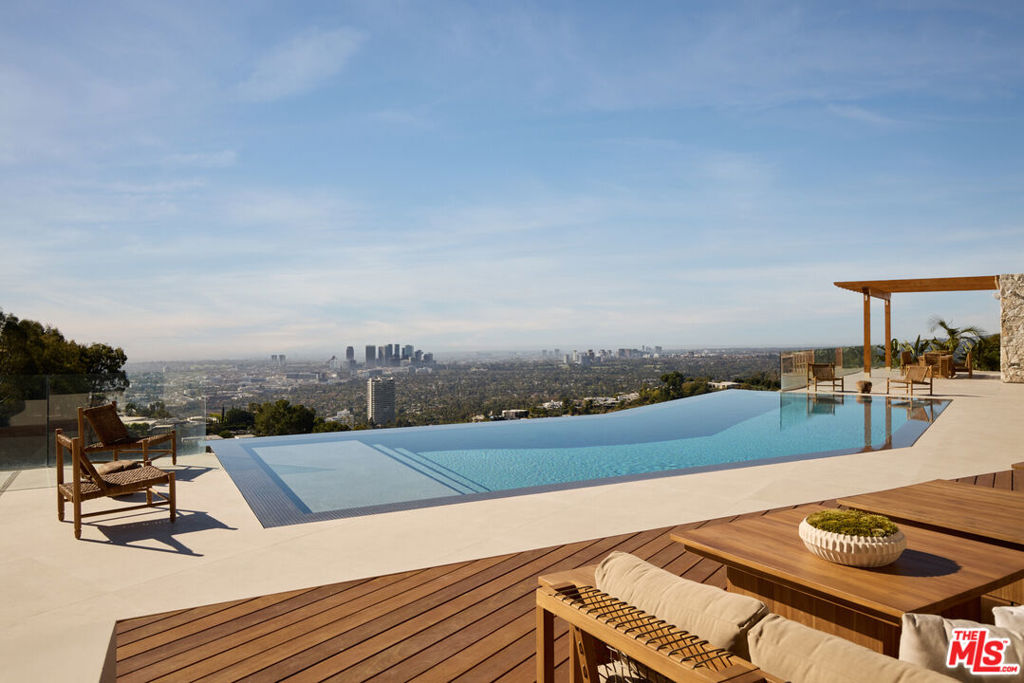
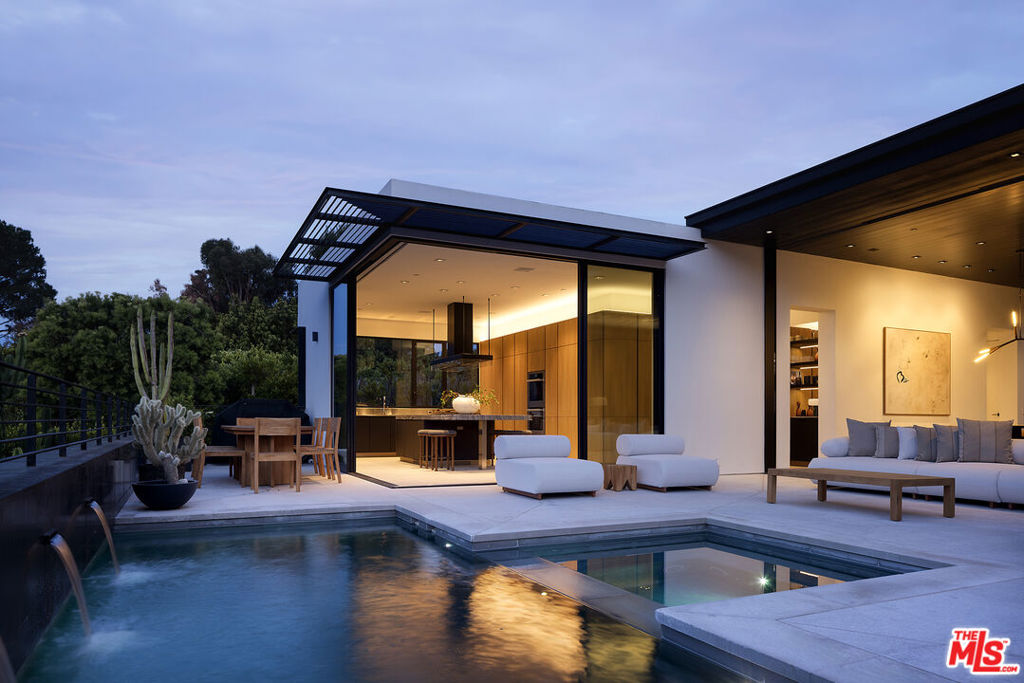
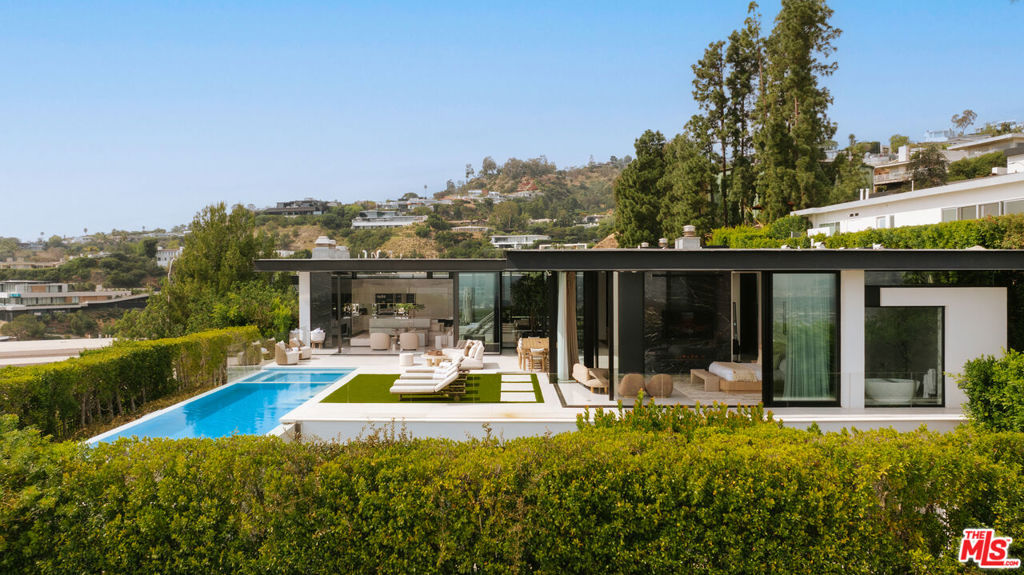
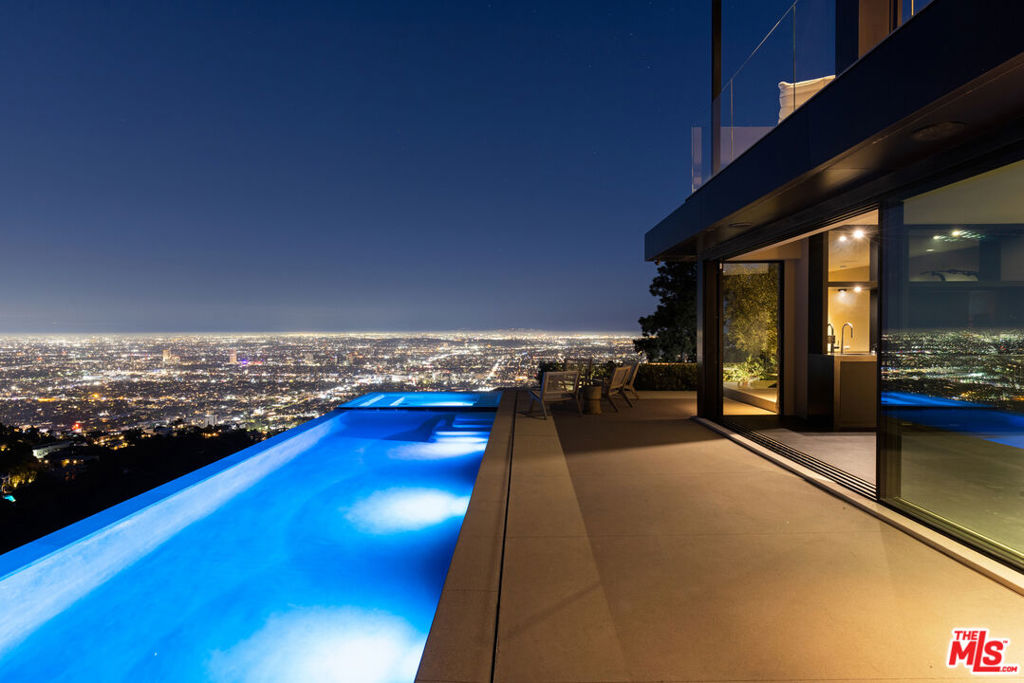
Blue Jay Way climbs above the Sunset Strip toward the ridgeline, its lots terraced for jetliner views from downtown to the Pacific. The Harrison-rented house is long gone, replaced by the glass-and-steel compounds that now define the street, but the literary pedigree endures—making it the most storied address in the Bird Streets. Which city the street belongs to depends on who is selling it: the same homes are marketed as Hollywood Hills, Beverly Hills or West Hollywood depending on the agent, though the Bird Streets sit inside the City of Los Angeles, directly above the Strip and within sight of Greystone to the west.
The Cape Cod Counterpoint
1634 Blue Jay Way—a Cape Cod–style residence by the legendary architect Paul R. Williams—was the home of Andy Heyward, creator of Inspector Gadget. Its New England silhouette is an anomaly on a street of glass towers, a reminder that the enclave's earliest ambition was architectural variety rather than uniform modernism.
What Can Be Built Here
Anything built new here falls under the City of Los Angeles Baseline Hillside Ordinance, which governs residential construction in the city's designated Hillside Areas. Rather than one flat cap on size, the ordinance sizes a house by slope: a surveyor maps how much of the lot sits in each slope band, each band carries its own floor-area ratio, and the permitted floor area is the sum of those bands — so the steeper the parcel, the less house it yields. Height is measured as an envelope that follows the grade, stepping with the hill rather than rising from one flat plane, and grading permitted by right is capped at a share of lot size plus a fixed allowance before a discretionary review is required. This is the quiet reason a view lot above the Strip trades at a premium to its square footage: the ridge supplies the sightline, and the ordinance limits how much can be put in front of it.
More in the Enclave
- Oriole DriveCubist modernism and old Hollywood pedigree on one of the enclave’s most architectural streets.
- Vireo DriveA leafy, mid-tier drive named for the plain gray songbird whose warble is the soundtrack of the western canopy.
- Oriole WayThe western stem of the Oriole family, where a legendary producer held the promontory.
- Marcheeta PlaceA cul-de-sac roosting just above the Bird Streets—named in 1924 alongside its feathery neighbors, and perhaps, the story goes, for someone's parakeet.
Read the history of the Bird Streets for how the enclave was named and built, browse all twenty-one streets, or see every Bird Streets home for sale and available for lease.
The Avian Feed
Residences on Blue Jay Way
Continue
Next · Oriole Drive